On October 16, 2020, the Ministry of Health of Uzbekistan approved the revised National Clinical Protocol for Safe Abortion via Order No. 3274. A few weeks later, on October 30, November 5 and 6, three online seminars were organized with Uzbek medical providers from around the country.
 The National Clinical Protocol for Safe Abortion in Uzbekistan is now better aligned with international recommendations designed to ensure access to high quality abortion care, and, according to WHO, will not require review for the next 5 years.
Previously, the National Clinical Protocol for Safe Abortion in Uzbekistan was broken up into separate documents for medical and surgical abortion during the first and second trimesters. Now, the documents have been unified into a single document, making it much more user friendly for providers. In addition, the new protocol bans dilation and curettage, a method that can lead to unnecessary health complications and infertility, in turn promoting the use of medical abortion and vacuum aspiration. Other important modification include permission to offer medical abortion up to 12 weeks of pregnancy (previously limited to 9 weeks) and detailed pre- and post-abortion counseling guidance.
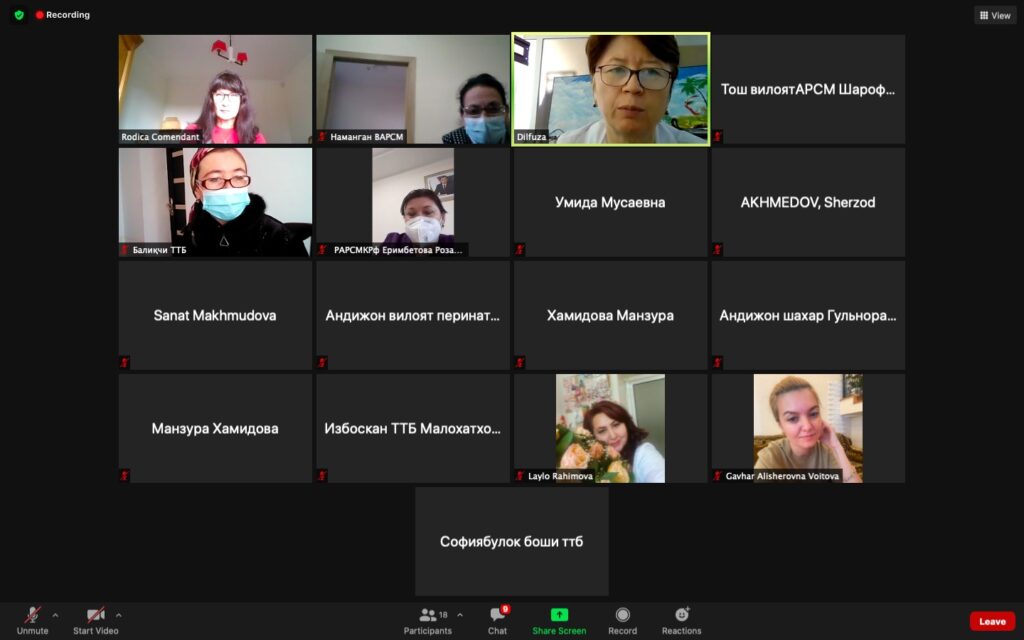
Overall, there were at least 60 participants in all three seminars, including medical providers from Tashkent and other regions, Deputy Director of the Women’s Wellness Center in Tashkent, Dr. Dilfuza Kurbanbekova, representatives from the Republican Reproductive Center in Tashkent, and RHTC team members, Rodica Comendant and Clay Cook. Particiants discussed the most recent safe abortion recommendations from FIGO, NAF, and WHO, including those specific to COVID-19, and key improvements to the national clinical protocol.
The revision of the National Clinical Protocol for Safe Abortion in Uzbekistan has been supported by the Safe Abortion Action Fund as part of the RTC-coordinated project “Bringing the WHO recommendations on safe abortion closer to women, in countries of Eastern Europe and Central Asia, by supporting the development of national clinical guidelines and protocols on unwanted pregnancy.”